February: News from Ingenjören in English

Photo: Getty images
Scroll down or click on the list to go straight to the part you want to read:

Deportation of teenagers impacts engineers

Sweden has long been seen as an attractive country for labor migrants, offering good opportunities to combine family and work. But the situation has changed – which representatives from Engineers of Sweden are now reacting to.
In an opinion piece published in Dagens Industri, Ulrika Lindstrand, chair of Engineers of Sweden, and Pia Sandvik, CEO of Teknikföretagen, warn that Sweden risks a “brain drain” that would hit the Swedish businesses, growth and welfare hard, unless the government halts the deportation of teenagers.
They highlight several critical issues:
Normally, labor migrants who have lived and worked in Sweden for four years can apply for permanent residency. The individual’s minor children are typically included in the application through family ties. However, if a child has turned 18, they are no longer legally considered to have those “family ties” – even if they still live with their parents and are attending high school.
“Cannot possibly fulfill these criteria”
To stay, the 18-year-old must independently meet strict requirements: having grounds for protection, a work permit with a salary of at least 33,390 SEK, or a student visa.
“The vast majority of 18-year-old children of labor migrants cannot possibly fulfill any of these criteria” Ulrika Lindstrand and Pia Sandvik write.
Children of labor migrants have been able to stay until age 21 if the parent applied for a new work permit instead of permanent residency. “But this comes at the cost of the entire family remaining on temporary permits only.” A government inquiry (SOU 2025:95) now proposes lowering that age limit to 18 as well.
Contradict ambitions to attract labor
Ulrika Lindstrand and Pia Sandvik argue that this directly contradicts the government’s ambition to make Sweden more attractive to highly skilled labor.
“This means two highly skilled migrants granted permanent residency could see their 18-year-old child deported. Families are being torn apart, and it is easy to understand why many parents in that situation choose to leave Sweden as well.”
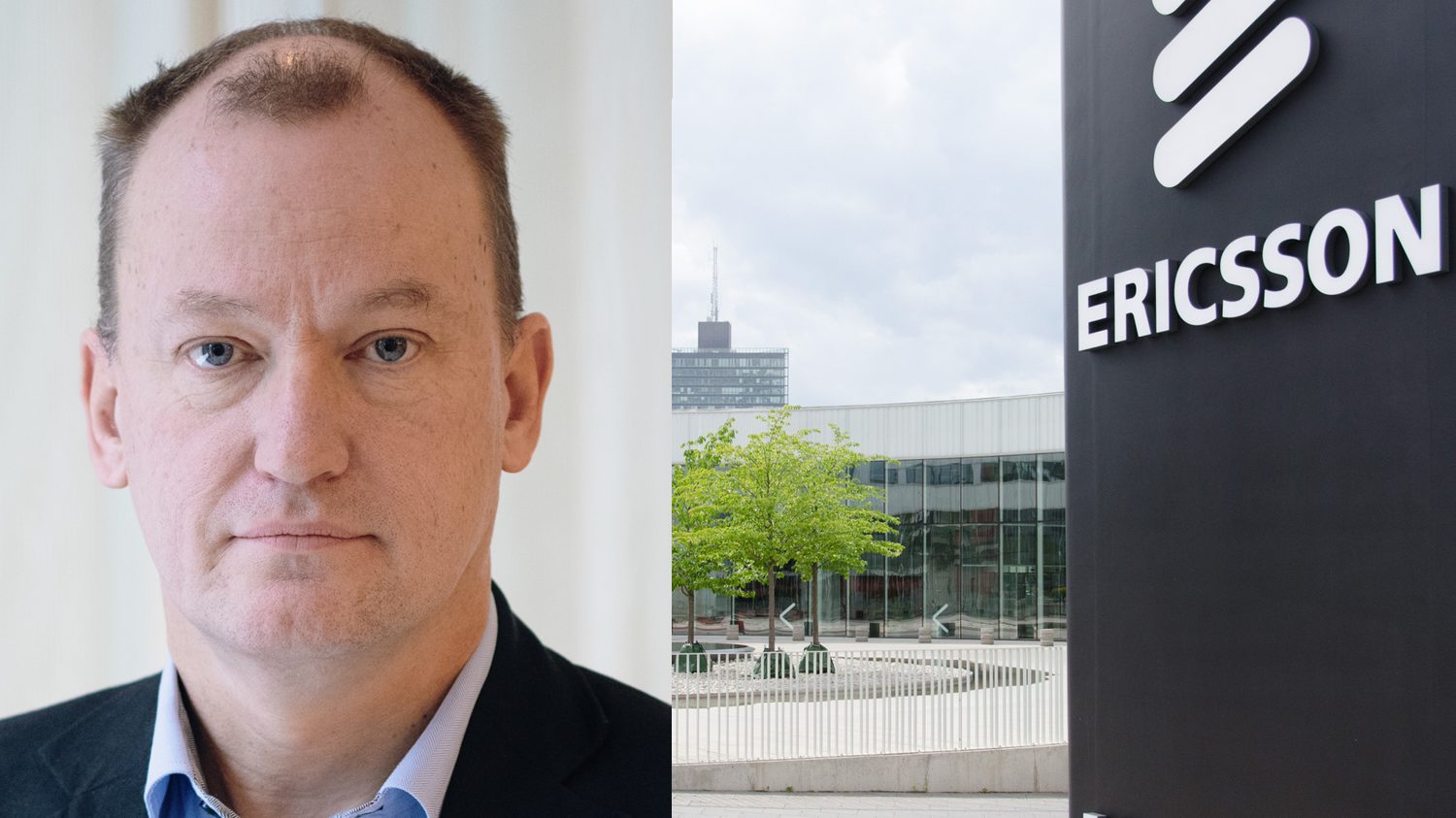
– This has been bubbling in the background, and we haven’t fully realized how difficult it has been, says Per Norlander, representative for the Swedish Association of Graduate Engineers at Ericsson.
At Ericsson, many Indian engineers in particular have been affected after “falling out of sync with the regulations”. Per Norlander shares stories of engineers at Ericsson who have been forced to send their 18-year-olds to other EU countries, only able to bring them back to Sweden on tourist visas during the summer.
Are planning to stay
The engineers affected do not view themselves as temporary guest workers; they plan to stay and continue their careers in Sweden. Per Norlander emphasizes that these labor migrants are helping Sweden, and we should value them so they don’t relocate to countries without these restrictive rules.
– We bring in labor, even granting them tax exemptions, but with the other hand, we deport their children, Per Norlander concludes.
Read the entire articles: Fack och arbetsgivare: Utvisningarna leder till ”brain drain” and Tonårsutvisningar slår mot ingenjörer – ”Kan inte vara avsikten”
Read the debate piece in Dagens industri: Tonårsutvisningarna hotar Sveriges välstånd
Bullying undermines the entire workplace – this is why you should take action

Every year, nearly a quarter of a million employees in Sweden are subjected to recurring harassment. More than twice that many experience occasional incidents that can develop into systematic bullying over time.
– This means well over half a million people go to work with a knot in their stomach, knowing that something unpleasant might happen again today, says Michael Rosander, professor of psychology at Linköping University, who has researched workplace bullying for many years.
The consequences are severe. For the victim, work becomes a source of torment, and both mental and physical health deteriorate. New studies support previous estimates that at least 100 suicides annually can be linked to workplace bullying.
This is twice the number of people who died in physical workplace accidents last year.
Affect the entire workplace
Bullying negatively impacts the entire workplace, not just the victim. Research indicates that witnesses experience poorer mental health, while employers face high costs due to increased sick leave and a decline in overall productivity and engagement.
– So, a smart employer should be investing heavily in addressing this, Michael Rosander says.
Preventing and addressing bullying is always the employer’s responsibility. However, colleagues can also make a difference. According to Michael Rosander, anyone who sees or suspects a colleague is being bullied should absolutely take action. Even a small gesture means a lot. Or, one could report what was seen and heard to a manager, or intervene directly in the moment.
– Intervening directly is a bigger step to take, but I believe every little bit helps. If you do something to try and rectify the situation, you are almost certainly doing the right thing.
Six tips: Counteracting workplace bullying
- Employer responsibility. It is always the employer’s obligation to prevent and address bullying. However, employees can contribute significantly to a healthy work environment.
- If you are targeted: Seek support through your manager, HR, occupational health services, or your union.
- Act quickly. Early intervention is crucial, as bullying tends to escalate over time. The consequences are severe for the victim, witnesses, and the workplace as a whole.
- Support the victim. Show the person being targeted that you see what is happening and that you do not approve. Inform a manager, or speak up directly in the situation – if you feel comfortable with that.
- Taking action benefits you. Those who intervene to prevent bullying, even discreetly, feel better mentally than those who remain silent.
- The risk of passivity. Staying passive and doing nothing increases your own long-term risk of being targeted by bullying yourself.
Read the entire article in Swedish: Mobbning sänker hela arbetsplatsen – därför bör du agera
“Today, AI Writes Most of My Code”
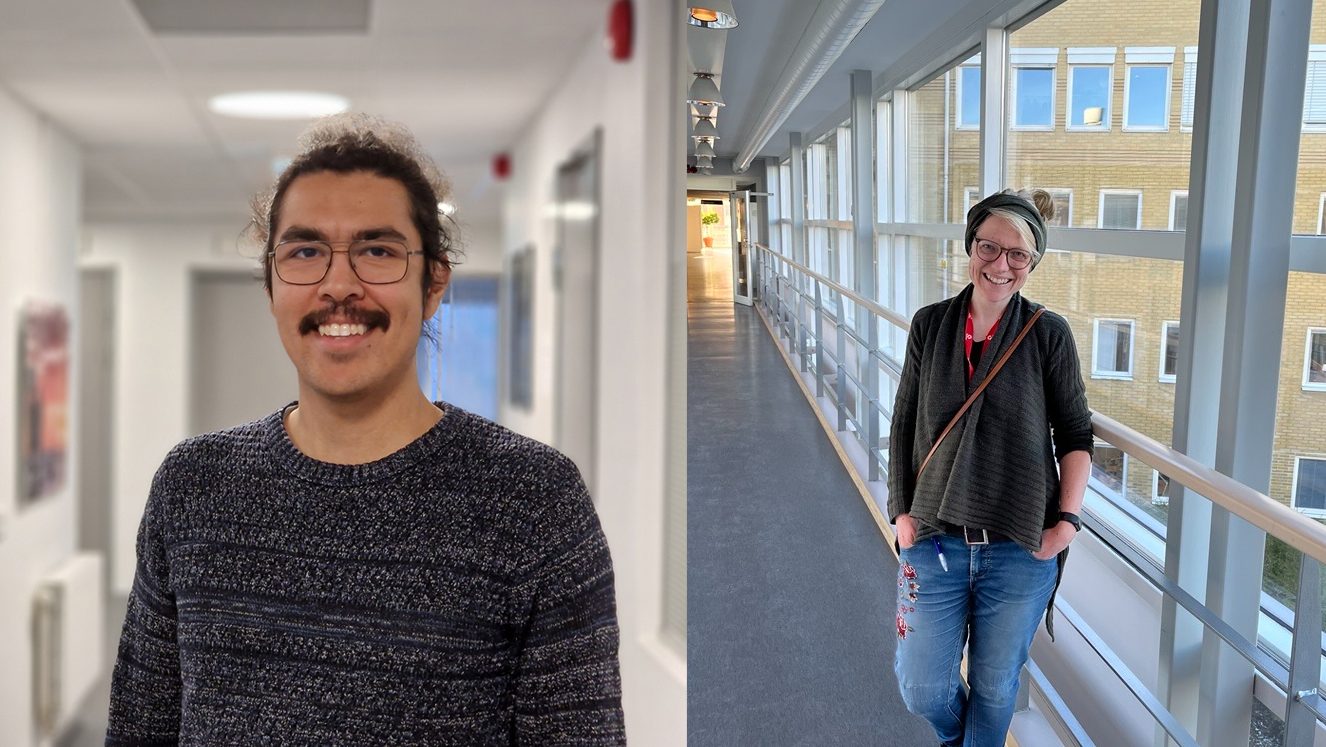
AI tools are becoming increasingly common in engineers’ daily lives, but do they really save time – and how do they affect professional expertise? Ingenjören has spoken with two engineers who have long experience working with AI. Here are their experiences and their best advice.
Johan Winther, a software developer at Icomera, has used AI language models like ChatGPT since he started as an engineer in 2019. He notes that development has moved fast.
– Today, I do most of my code generation using GitHub Copilot. Much of software development is about someone already doing something similar – that’s where these tools are very effective, he says.
At Icomera, everyone has access to the company’s AI tools. Different teams have different needs and share tips on how to best utilize them. When Johan Winther does research – for instance, checking if two tools are compatible – he knows that the AI’s answers are often “hallucinations”. Yet, they are still useful.
– The answer is often close enough for me to continue on my own.
A help to make the right choices
Another engineer using AI in her work is Kerstin Johnsson, who has spent nearly 10 years developing AI. Since May 2025, she has served as a senior data scientist at Region Skåne’s new unit for AI and machine learning.
Kerstin Johnsson uses Copilot in VS Code when programming. She receives automatic suggestions as she writes and also utilizes the agent mode. Recently, she asked the agent to do a refactoring (restructuring of code) and then benchmark the new code – did it get the same results, and how much faster did it go?
– It didn’t run faster, but I got a clear report and could quickly make the right strategic choices. It’s a very powerful tool.
Experience both worlds
For those who program, Kerstin Johnsson’s advice is to use AI tools, but not to do so all the time.
– For your own employability, it’s good to have experienced both worlds. To know how to program, but to use AI so as not to miss out on efficiency. Sometimes I work without AI. It’s good for my own skills.
Kerstin Johnsson’s Advice
- Get started with AI tools – it’s not too late.
- You can get far with standard chatbots. If you get poor results, try other tools, rephrase your prompts, or wait a few months to see if the AI has improved.
- Build a network to discuss and share experiences with.
- Handling sensitive data? Find side projects, such as hackathons, where you can experiment freely.
- Don’t become entirely dependent on AI. Actively maintain and update your own core skills.
- Use AI as a coach – ask it for guidance on how to begin a new task.
Johan Winther’s Advice
- Understand the capabilities and limitations. Learn what AI can and cannot do.
- Use the models for what they excel at.
- Guidance despite “hallucinations”. Even if the AI provides incorrect details, the answer can often point you in the right direction.
- Share tips with others – but also experiment on your own to find what works best for your specific workflow.
Read the entire article in Swedish: ”I dag skriver AI stora delar av min kod”
Waiving overtime pay: “How do I compensate my extra hours?”
The proportion of those who do not have the right to overtime pay has increased among the members of Engineers of Sweden. Since 1995, this figure within the private sector has risen from 35 to 69 percent.
Now, several union representatives interviewed by Ingenjören testify that there is a lack of clarty regarding what applies when you have waived your right to overtime pay.
– If the boss orders work, for example late evenings – how can I compensate for that time? What kind of dialogue must I have with the manager? Can I take time off without formally requesting leave? These are the questions we often face. It is clear that the freedom associated with waiving overtime pay is interpreted differently among managers, says one union representative within the industry.
– It becomes a problem primarily when managers have a high need for control. The Technological Agreement (Teknikavtalet) is good, but the application of it is often problematic, says another representative.

Camilla Frankelius, head of negotiations at Engineers of Sweden, explains that flexibility regarding working hours must be built on trust between manager and employee. Furthermore, it does not mean that one has agreed to a higher total number of working hours.
– There is, therefore, no requirement to constantly work more hours than the standard weekly working hours at the workplace, she says.
Union representatives in the industrial sector tell Ingenjören that employees are waiving their overtime pay for the wrong reasons. Sometimes it is used as a way to increase salaries, and in some cases, to solve problems with understaffing.
If waiving overtime pay is used as a substitute for recruiting new staff, Camilla Frankelius believes the unions should demand an MBL negotiation.
– It is a poor and short-term solution that should not occur, she says.
What is your advice to engineers who have waived overtime pay but are working a lot of overtime?
– Keep a record of your working hours, and if you regularly work overtime, you should talk to your manager. And remember that you can terminate the agreement. The freedom to manage your own working hours must mean that you can balance your overtime by taking time off occasionally, says Camilla Frankelius.
Read the entire article in Swedish: Övertidsavlöst: ”Hur får jag kompensera övertiden?”
More to read in English
All articles in Ingenjören that have been translated into English
The guide from Ingenjören in English (magazine from 2024) – About Engineers of Sweden and the Swedish labour market model
Information in English from Engineers of Sweden (including button for Google Translate-version of the entire Engineers of Sweden website)