
March: News from Ingenjören in English

Photo: Getty images
Scroll down or click on the list to go straight to the part you want to read:
- Engineering salaries 2025: Lower increases but more purchasing power
- Salary trends: Two factors have a big impact
- Quitting your job? Here is what you need to know
- Salary reviews: It’s not about being the best talker
- The engineer election: Your vote generates a donation
- How to avoid friction in cross-functional teams

Engineering salaries 2025: Lower increases but more purchasing power
Last year, individual salary increases for engineers in the private sector reached their lowest levels since the pandemic. However, due to a decline in inflation, 87 percent of engineers across all sectors saw a real wage increase.
In 2025, individual salary increases in the private sector averaged 5.8 percent. In the state sector, the increase was 4.2 percent – a significant drop of 1.4 percentage points compared to the record-high levels of 2024.
For engineers in municipalities and regions, the average increase was 4.3 percent, slightly lower than the previous year.
Several factors contributed to the more modest raises:
- Rising unemployment. Among members of Sveriges Ingenjörer, unemployment rose from 1.3 percent in early 2025 to 1.8 percent in September – the highest level since 2013.
- Corporate downsizing. Major companies like Volvo Cars implemented cuts, and Northvolt filed for bankruptcy.
- Industry shifts. Expanding sectors, such as the defense industry, were able to recruit without needing to offer significantly higher salaries than other branches.
Despite lower nominal raises, the vast majority of engineers saw their purchasing power improve. In the private sector, 94 percent received a real wage increase, followed by 87 percent in municipalities and regions, and 81 percent in the state sector.
Read the entire article in Swedish: Så mycket ökade ingenjörernas löner 2025
Salary trends: Two factors have a big impact

How much your salary increases depends on whether you change jobs or stay put – but age also plays a significant role.
Salary statistics show that those who change jobs receive higher raises than those who do not. The largest increases occur when moving to a new employer, though internal job changes also prove beneficial.
The impact of age and mobility
The percentage-based raises are highest among the youngest group (up to age 29), reaching 7.2 percent for those who stayed in their roles and 13.4 percent for those who switched jobs. From there, the percentage increase gradually declines with age.
For engineers aged 60 and over, the average salary increase was 3.5 percent for those who stayed, compared to 5.8 percent for those who changed jobs.
“Don’t wait for the annual review”
Camilla Frankelius, head of negotiations at Engineers of Sweden, reminds engineers to keep their salary in mind throughout the year.
– Remember that you can discuss your salary whenever there are changes in your role or when you feel you’ve achieved something significant. You don’t have to wait for the next formal salary review – you can bring it up with your manager at any time during the year, says Camilla Frankelius.
Read the full salary report from Engineers of Sweden in Swedish.
Read the entire article in Swedish: Så skiljer löneökningen – två faktorer påverkar mycket
Quitting your job? Here is what you need to know

Have you found a new job – or have you simply had enough? Regardless of the reason, it is important to stay cool before handing in your notice.
Here are a few things you need to keep track of to avoid unnecessary mistakes:
- Keep an eye on the notice period. Your notice period is usually stated in your employment contract. If it isn’t regulated there, the notice period according to the collective agreement at your workplace applies. If there is no collective agreement, the notice period follows the Employment Protection Act (LAS).
- Avoid gaps between employments. A gap can affect your SGI (Sickness Benefit Qualifying Income).
- Consider your financial situation. Resigning on your own initiative has a major impact on benefits from both unemployment insurance (a-kassa) and income insurance.
- Resign both verbally and in writing. Ensure that the specific dates for both the resignation and your final day of employment are clearly stated.
- Remember the duty of loyalty. This applies throughout the entire employment period, even if you are exempted from work during your notice period.
- Check for non-competition agreement. There may be additional regulations in your contract concerning the time after your employment ends, such as a non-compete agreement or a non-solicitation clause.
Resigning in the heat of the moment is rarely a good idea. But what can I do if I truly can’t stand being at work?
Talking to an advisor is a great first step, suggests Hedvig Nilsén, ombudsman at Engineers of Sweden.
– To begin with, it is important to clarify the current situation and identify what is affecting you the most. A conversation with our advisory service can help you sort through the situation, says Hedvig Nilsén.
Read the entire article: ”Jag vill säga upp mig – är det en bra idé?”
Salary reviews: It’s not about being the best talker
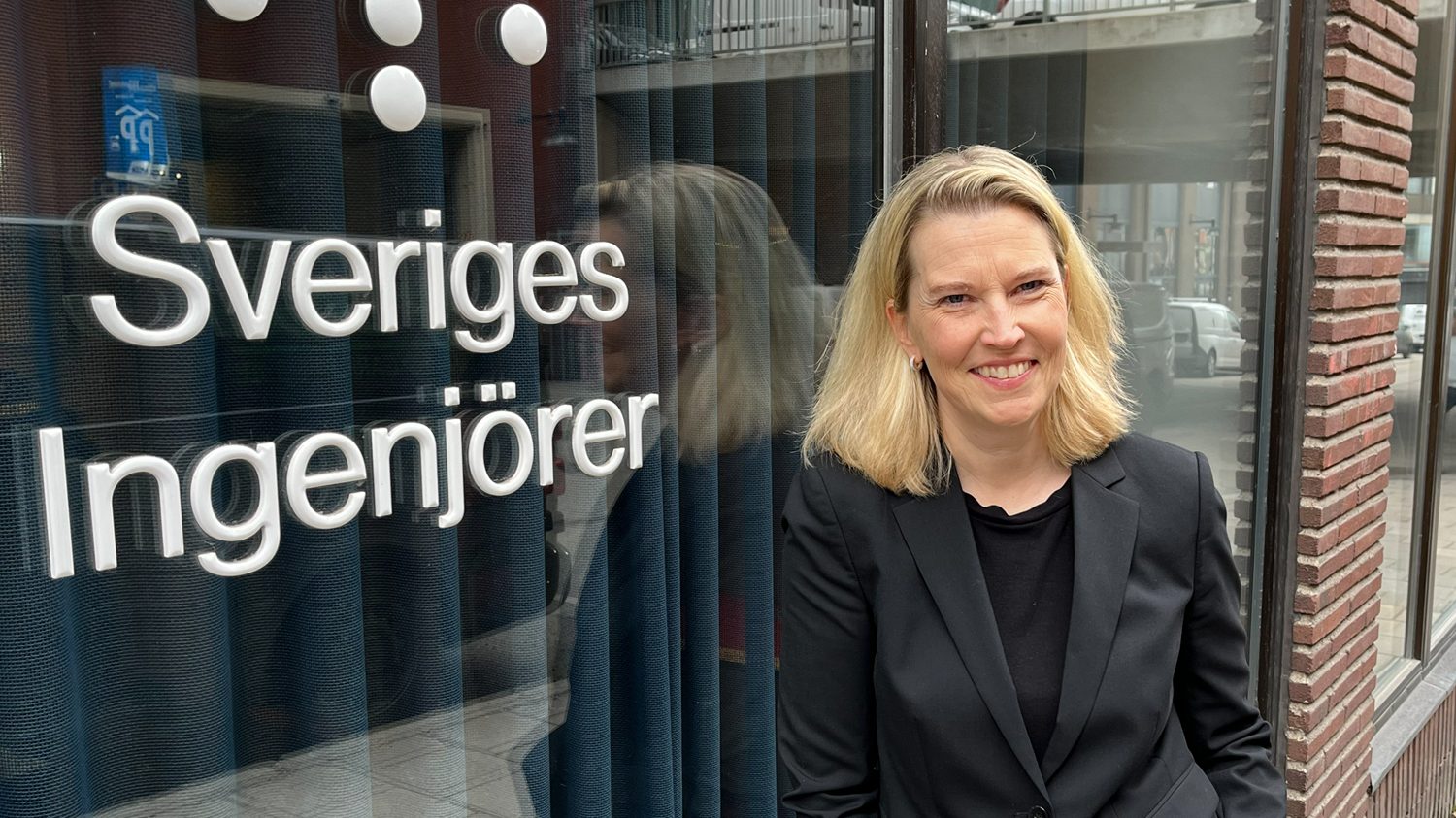
It might feel like bragging, but the salary review is your chance to highlight everything you’ve achieved during the year. This is especially important if you aren’t naturally in the spotlight, or if your manager isn’t fully aware of your daily contributions.
Some members call Engineers of Sweden’s advisory service just fifteen minutes before their meeting. While fifteen minutes of preparation is better than nothing, it’s wise to invest a bit more time, advises Emma Sallnäs, head of advisory services at Engineers of Sweden.
– You don’t need to do an overwhelming amount of work, but make a list and show them what you have done well.
Know your numbers
The foundation of your salary is your performance – doing a good job. If you feel you’ve performed well, make sure it’s visible. A great tip is to use feedback you’ve received from clients, colleagues, or other managers during the year.
Be prepared for the question: What salary are you expecting? Before the meeting, check the statistics and get the facts. Emma Sallnäs suggests using Saco Lönesök, but also reaching out to local union representatives who can provide insight into the salary levels specific to your workplace.
Read more in the article The English guide to Saco Salary Statistic
As part of your preparation, find out how the process works at your company: What are the salary criteria? Are there templates for the review? Will there be one or several meetings?
Avoid these common pitfalls
- Working hard on the wrong things. Ensure you are working on the right priorities by checking in regularly with your manager throughout the year.
- Using the wrong arguments. Avoid basing your request on high inflation, expensive loans, or what your colleagues earn. Base your arguments on facts and performance.
- Empty threats. Never say you will resign if you don’t get a certain salary – unless you are actually prepared to follow through.
Be constructive
If you don’t get the raise you hoped for, stay constructive. If you’ve hit a “salary ceiling”, consider whether you can switch to a better-paying role internally or if it’s time to seek a higher salary with a different employer.
Emma Sallnäs points out that preparation reduces nerves. Her advice is to treat the salary review like any other professional task.
– Salary reviews benefit those who aren’t always seen. Those who talk a lot are noticed anyway. In that sense, the salary review is a democratic and positive thing – it ensures that the great work you do gets noticed.
Read the entire article in Swedish: Lönesamtal handlar inte om att vara bäst på att snacka
The engineer election: Your vote generates a donation

From April 10 – 30, the election of representatives to the union’s highest decision-making body, the Engineer’s council, takes place. Every vote also makes a global impact, as the union donates 10 SEK per vote to Engineers without borders.
Engineers without borders is a Swedish volunteer organization founded 17 years ago. Today, it has around 600 members, including approximately 250 active volunteers managing 24 projects across several countries in Africa and Asia.
Some examples of projects are:
- A project focused on more efficient beekeeping in Tanzania. It also trains carpenters to build hives and teaches beekeepers how to run cooperatives. Additionally, new trees are planted to provide food for the bees and shade for the soil.
- In a slum area of Nairobi in Kenya, a plot of land has been purchased to expand a school using repurposed shipping containers.
- In Tanzania Ecosan toilets have been built at two schools. At two other schools, approximately 1,500 students have gained access to clean drinking water. Furthermore, around 2,500 students have received education on menstrual health and hygiene.
The organization is primarily funded by grants from foundations and donations, with membership fees contributing a smaller portion of the resources.
For every vote cast in the Engineer election, Engineers of Sweden donates 10 SEK to Engineers without borders. During the election four years ago, 12,290 members voted, resulting in a donation of 122,290 SEK to the organization.
Click here to read more about the Engineer election, opening April 10.
Read the entire article in Swedish: De får pengar när du röstar i Ingenjörsvalet
How to avoid friction in cross-functional teams
In cross-functional projects, technical skill alone isn’t enough. When different areas of expertise collide, misunderstandings often arise – they may not always be visible, but they are certainly felt.

Tomas Eriksson is an engineer with a background in psychology who lectures on communication and teamwork. Bengt Kallenberg is an engineer and leadership coach with extensive experience in technical organizations.
These are their collective tips for avoiding misunderstandings in cross-functional teams:
- Invest time in roles before solving problems. Early in the project, take the time to understand what others actually do, what their needs are, and what challenges they face daily. This lowers the threshold for asking questions later when things become unclear.
- Expose “false consensus” early. When everyone is nodding but the conversation dies out, it’s often a warning sign. Dare to ask clarifying questions like: When you say X, what specifically do you mean by that? – do this before misunderstandings become set in stone.
- Translate technical concepts into plain language. Make it a personal challenge to explain technical workflows so that those without your background can understand. Identify which acronyms and terms need defining – and which ones are prone to misinterpretation.
- Draw more, talk less. Visualization creates a shared language. Map out workflows, show examples, and make the vision concrete. This reduces the risk of everyone talking about different things without realizing it.
- Take responsibility for the climate – not just the content. Communication is everyone’s responsibility. Ask questions when you don’t understand, request help when needed, and be clear about your own strengths. A psychologically safe environment makes it possible to be wrong, to ask, and to think out loud.
Read the entire article in Swedish: Friktion i tekniska teamet – 5 tips för att kommunicera bättre
More to read in English
All articles in Ingenjören that have been translated into English
The guide from Ingenjören in English (magazine from 2024) – About Engineers of Sweden and the Swedish labour market model
Information in English from Engineers of Sweden (including button for Google Translate-version of the entire Engineers of Sweden website)