
January: News from Ingenjören in English

Photo: Getty images
Scroll down or click on the list to go straight to the part you want to read:

This is the overtime reality for managers – one sector stands out

On average, engineering managers work 15 hours of overtime every month. And the higher up the corporate ladder you go, the more overtime is required.
These findings come from the 2024 salary survey by Engineers of Sweden, where around 15,700 engineering managers responded to questions regarding salary and working conditions.
CEOs, directors-general, as well as regional and municipal directors work an average of 23 overtime hours per month. Other senior managers average 21 hours, middle managers 16 hours, and first-line managers 12 hours.
The amount of overtime also varies between different sectors. In the private sector, the figure is 15 hours. At state agencies and authorities, it is 14 hours, and in municipalities and regions, 13 hours.
One sector stands out in the survey – universities and colleges. Here engineering managers have 20 hours of overtime per month. Peter Hellqvist, chairman of the local Saco-S at Chalmers, is not surprised by these statistics.
– When researchers and teachers are appointed to a management position, they often retain their previous duties alongside their managerial role. In many cases, the original workload isn’t reduced significantly; instead, the management assignment is added on top of it, even if they are supposed to be compensated for the role, he says.
Read the entire article in Swedish: Så mycket jobbar ingenjörscheferna över – en sektor sticker ut
Ericsson cuts 1,600 jobs despite strong results: “Damages the Brand”
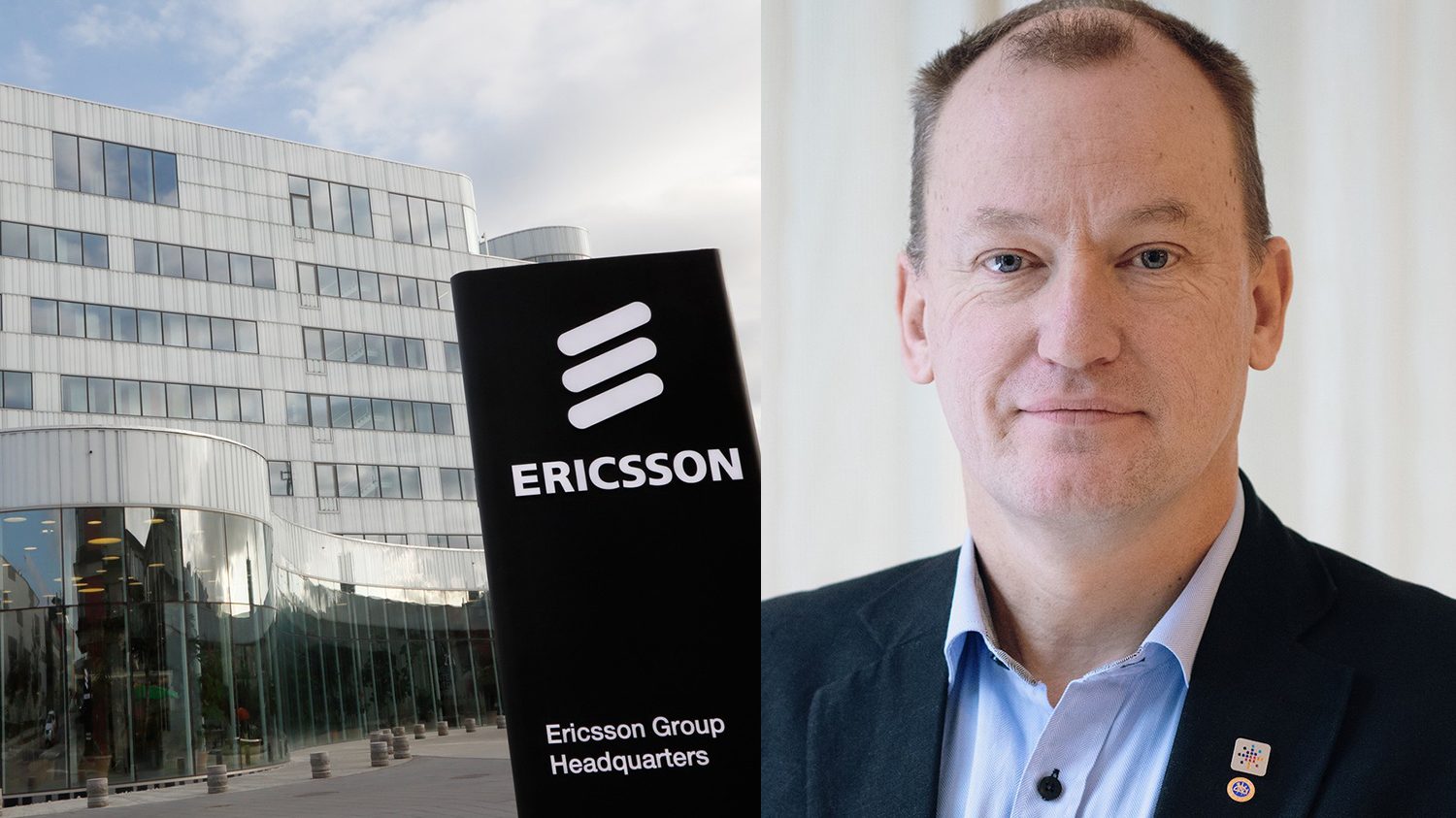
Just days after announcing massive redundancies, Ericsson released a quarterly report that sent share prices soaring. “This is definitely damaging Ericsson’s brand among engineers” says Per Norlander, chief union negotiator for Engineers of Sweden.
Ericsson’s Q4 report reveals strong 5G performance and improving margins. Despite this, the company has announced plans to cut over 10 percent of its Swedish workforce – approximately 1,600 roles.
CEO Börje Ekholm defended the move in several interviews, stating that the company must be able to “accelerate and brake at the same time” acknowledging that the decision “may be difficult to understand”.
Per Norlander of Engineers of Sweden argues the decision is flawed for several reasons.
– There is so much emotional weight in a redundancy notice. It damages the brand and affects all 12,700 Ericsson employees in Sweden. The damage could also be long-term, he warns.
“The engine that drives Ericsson forward”
Between 2017 and 2022, Ericsson issued no redundancy notices in Sweden. However, the current cuts mark the third major intervention in a short period, following a voluntary redundancy scheme in 2023 and further notices in 2024.
According to Per Norlander, the cuts appear to hit Research and Development (R&D) particularly hard. In Kista alone, approximately 1,170 employees could lose their jobs. Other sites identified for cuts include Gothenburg, Lund, Linköping, and Karlskrona.
– Research and development is the engine that drives Ericsson forward. The research Ericsson invests in today forms the basis for sales in ten years’ time. That is why this is so concerning, says Per Norlander.
Specific redundancy notices are expected to be issued before the summer.
Read the entire article in Swedish: Ingenjörerna på Ericsson: ”Varslet skadar varumärket och företagskulturen”
Unemployment on the decline
For the first time since 2022, unemployment among engineers has fallen for three consecutive months.
In August, engineering unemployment hit 1.7 percent, the highest figure recorded since the pandemic. While there was a slight further increase in September, the rate has seen a steady decline throughout the autumn. By December, the total unemployment rate for engineers had dropped to 1.5 per cent.
– There are many signs suggesting that unemployment is on a downward trend, and we believe it will continue to decrease during the spring – all else being equal. However, threats of tariffs and general unpredictability mean that a level of uncertainty remains, says Albert Ohlin at Engineers of Sweden.
A closer look at various educational backgrounds reveals several encouraging signs:
- No single industry stands out in the unemployment statistics; the decline is occurring in all areas.
- Industrial economics, a field typically sensitive to economic fluctuations, has begun to recover.
- Bachelor’s graduates in the construction industry is the only specialization that now shows lower unemployment figures compared to December of the previous year.
- The decline in unemployment is evident across all age brackets. The highest rate remains among engineers aged 60 to 64.
Read the entire article in Swedish: Arbetslösheten på väg ned: Ser positivt ut framöver
Telia to cut 600 jobs globally as AI drives efficiency
The Swedish telecoms giant Telia has announced further restructuring. Up to 600 positions could disappear globally, including approximately 215 in Sweden.
Anders Wedebrand, chair of Akademikerföreningen at Telia, states that AI is among the factors streamlining operations, consequently reducing the number of employees required.

Negotiations between the unions and the employer are ongoing, and it will be some time before final decisions are reached regarding which individuals will be made redundant.
The new organisational structure is set to take effect on 1 March. Anders Wedebrand expects those affected by redundancies to be notified in early February. At that point, they will be offered the severance package negotiated between the unions and the employer.
Those who decline the severance offer will instead enter negotiations governed by the rules of LAS, the Swedish Employment Protection Act.
However, Anders Wedebrand emphasises that the impact always extends far beyond those who actually leave the company.
– Everyone is affected by a new organisation. Suddenly, tasks must be performed by fewer people, some face changing responsibilities, and others a new manager. It is a major transition for everyone involved, he says.
Read the entire article in Swedish: Neddragningar på Telia: ”AI effektiviserar arbete”
Engineering salaries vary by specialization

There is an average salary gap of 11,500 SEK between the Master of Science in Engineering programs with the highest and lowest pay. For those with a Bachelor of Science in Engineering, the difference is 7,000 SEK. This is shown by analyses of salary statistics from Engineers of Sweden.
The statistics are based on average and median salaries per educational group based on 2024 salaries, in the private sector. Managers are not included in the statistics and the group is divided based on time since graduation.
The difference in average salary is greatest 11–25 years post-graduation. The gap is smallest for those who graduated more than 25 years ago.
When looking at median salaries, the differences are smaller and more consistent throughout a professional career.
For master’s graduates, industrial economics holds a clear first place – both in terms of mean and median salary, regardless of the time since graduation.
Otherwise, many specializations are close to each other in salary. For example, the average salary for the group 11–25 years post-graduation is the same for chemical and mechanical engineering, construction is only 400 kronor higher, and energy and electrical engineering is 100 kronor above construction.
For Bachelor’s graduates, Computer Engineering consistently ranks the highest, though smaller sample sizes in certain groups make it more difficult to draw firm conclusions regarding salary levels.
Read more about salary
- Engineers of Sweden’s page about salaries for Master’s and Bachelor’s graduates.
- Saco Salary Search.
- Engineers of Sweden’s report from December 2024 on salaries for engineers in the first five years after graduation.
See all the diagrams and read the entire article in Swedish: Så skiljer lönen mellan ingenjörsinriktningarna
More to read in English
All articles in Ingenjören that have been translated into English
The guide from Ingenjören in English (magazine from 2024) – About Engineers of Sweden and the Swedish labour market model.
Information in English from Engineers of Sweden (including button for Google Translate-version of the entire Engineers of Sweden website)