April: News from Ingenjören in English

Photo: Getty images
Scroll down or click on the list to go straight to the part you want to read:

Volvo Cars introduces digital attendance tracking
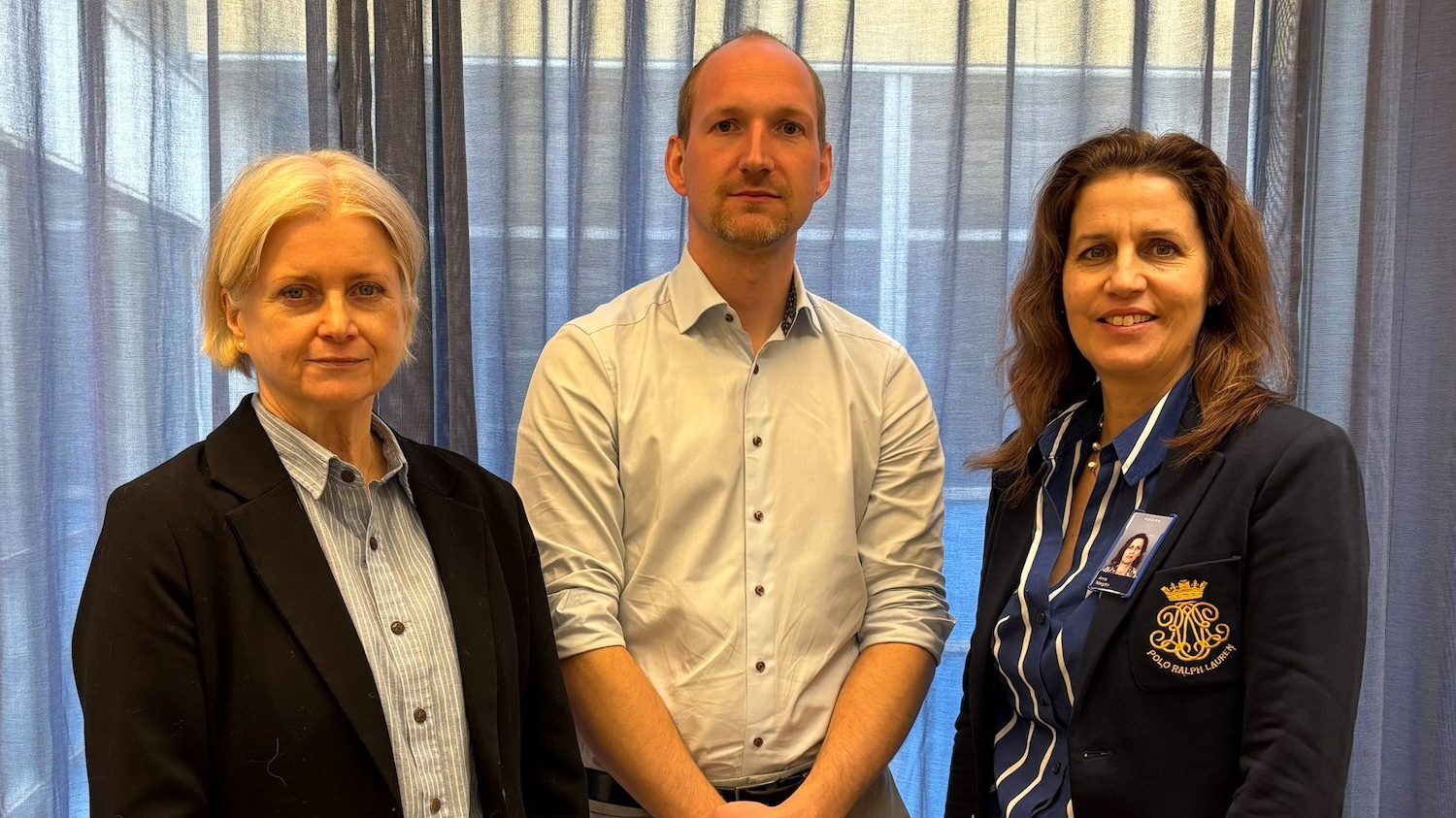
In mid-February, Volvo Cars introduced digital attendance tracking at the company’s offices called Attendance Insight Tool. When a computer or phone connects to the office Wi-Fi, the employer knows the employee is on-site.
During the co-determination negotiations (MBL), the local Saco association Akademikerföreningen voiced their criticism, but the company decided to implement the system regardless.
– Collecting data at the individual level risks undermining trust and creating more stress. A sustainable work life is built on trust, not surveillance, says Kristina Tullgren, chair of Akademikerföreningen at Volvo Cars.
Measure attendence via Wi-Fi
The digital tool introduced by the employer measures office attendance at an individual level by connecting the employee’s computer or phone to the company’s Wi-Fi. The results of these measurements are reported and analyzed at a group level. The guidelines state that attendance should be at 80 percent, which allows for employees who are sick or on business travel.
– Our members are critical of the change. People are feeling the stress of increased peer pressure to be at the office, says Marcus Magnusson, vice chair of the Akademikerföreningen.
Volvo Cars’ management justifies the decision to introduce digital attendance monitoring by citing the need to get more employees into the offices.
Not convinced by the arguments
Akademikerföreningen maintains that office attendance is a leadership issue, and that it is the managers’ responsibility to bring their teams together.
Furthermore, they are not convinced that increased digital monitoring leads to better results; the risk is quite the opposite. They would have preferred to see more focus on clear goals, dialogue, and trust-based leadership.
Read the entire article in Swedish: Digital närvarokontroll på Volvo Cars – trots akademikernas protester
”Do I have income insurance – and how much do I get?”

As a member of Engineers of Sweden, you are covered by an income insurance policy if you become unemployed. This is how it works.
Because the standard unemployment benefit (a-kassa) is capped at 27,200 SEK per month before tax, most engineers experience a significant drop in income if they lose their job. An income insurance is designed to bridge that gap.
To qualify for the insurance, you must meet the following criteria:
- Membership. You must have been a member of both Engineers of Sweden and Akademikernas a-kassa for at least 12 consecutive months.
- A-kassa status. You must meet the requirements for standard a-kassa and be entitled to the 80 percent compensation level for 300 days (i.e., have had an income of at least 11,000 kronor per month for at least 11 of the past 12 months).
- Reason for unemployment. You must be involuntarily unemployed (i.e., you cannot have resigned voluntarily).
- Application. You must submit an application for both your a-kassa and the income insurance.
The insurance, provided by Folksam, offers the following coverage:
Days 1–100: Up to 80 percent of your monthly salary (capped at 100,000 SEK before tax).
Days 101–150: Up to 70 percent of your monthly salary.
The insurence covers 150 days, which equates to approximately 7 months, based on 22 payable days per month.
So, how much do you get? Here are three examples (after tax):
- With a monthly salary of 40,000 SEK, Folksam calculates that you will receive 31,101 SEK after tax as an employee. As an unemployed person, with unemployment insurance plus income insurance, it will be 23,067 SEK after tax for the first 100 days of compensation and 20,387 SEK for days 101–150.
- With a monthly salary of SEK 60,000, you will receive SEK 45,357 after tax as an employee. Unemployment insurance compensation plus income insurance will total SEK 34,062 after tax for the first 100 days and SEK 29,862 thereafter.
- With a monthly salary of SEK 80,000, Folksam calculates that you will receive SEK 55,357 after tax as an employee. Unemployment insurance compensation plus income insurance will total SEK 43,469 after tax for the first 100 days and SEK 39,469 thereafter.
If the included insurance feels insufficient, members can purchase a voluntary supplement via Folksam. This allows you to:
- Extend the payout duration.
- Cover salarys exceeding 100,000 SEK per month.
Note: If you purchase the voluntary supplement for a higher salary, you are responsible for updating Folksam regarding any changes to your income. This reporting is not required for the standard insurance included in your union membership.
Read the entire article in Swedish: ”Har jag inkomstförsäkring? Och hur mycket får jag?”
5 questions you should ask when a Teams meeting is recorded
Workplace are often documented via AI-generated recordings, transcripts, and summaries. While this improves documentation, it also changes the power dynamics of a meeting, impacting who controls the ”official version” of events when responsibilities are assigned or disputes arise.

According to Heléne Robson, Chief Legal Officer at Engineers of Sweden, it is legal under Swedish law to record a meeting you are personally participating in, even without informing others. However, it is strictly illegal to record a meeting you do not attend.
But there can be consequences that you must be aware of. Any recorded material or transcript can be used as evidence in labor law disputes (for example, regarding performance, promotions, or termination). Thus, as technology makes recording easier, it is also essential to protect your own professional integrity.
Here are five questions you can ask if you want clarity when a meeting is recorded:
1. What is the purpose of recording this specific meeting?
It makes a significant difference whether the recording is intended to be a simple memory aid, a project follow-up, or something that may later be used for formal performance assessment.
2. How long will the recording, transcript, and AI summary be saved?
Cloud storage makes it easy to keep data indefinitely. It is reasonable to ask for a clear retention policy.
3. Who will have access to this afterward?
You need to know if the material will be accessible outside the original meeting participants, especially if it could be used in other contexts.
4. Could this be used later for follow-ups, performance reviews, or in the event of a conflict?
Documentation that is useful for project management today can become sensitive during a salary negotiation or a future dispute.
5. If the meeting changes nature: I wasn’t aware the meeting would cover this. I need to prepare differently; I would like to reschedule.
If a meeting suddenly shifts from general discussion to criticism or reprimand, it may have employment law consequences. In such situations, it is wise to pause the meeting and, if necessary, request that a union representative be present.
These tips are based on advice and reasoning from Heléne Robson, Chief Legal Officer at Engineers of Sweden.
Read the entire article in Swedish: 5 frågor du bör ställa när Teamsmötet spelas in
Salary differences for engineers in the public sector

Engineers working for government agencies, municipalities, and regions earn lower salaries than their counterparts in the private sector. This trend holds true for managers as well.
The highest earners in the public sector are M.Sc. engineers (civilingenjörer) who graduated before 1990 and have pursued careers at universities or colleges.
Differences by professional group and sector:
Master of Science in Engineering (Civilingenjörer): The salary gap compared to the private sector is relatively small shortly after graduation, but it widens quickly as salary growth is flatter in municipalities and regions.
Bachelor of Science in Engineering (Högskoleingenjörer): The salary gap compared to the private sector is smaller than it is for Master of Science engineers.
Managers: There is a clear salary gap compared to the private sector. However, the difference between managers in the state sector versus the municipal/regional sector is small.
About the Salary Statistics
The information is based on Saco salary search (Saco lönesök), which compiles data from the annual salary survey conducted by Engineers of Sweden. In the 2025 salary survey, approximately 80,400 engineers (58 percent of the association’s active members) responded. For employees in the public sector, the survey data is combined with salary information collected by employers
You can explore and compare salary data in detail using the Saco salary search tool.
Read the entire article with all the graphs in Swedish: Så mycket tjänar ingenjörer i offentlig sektor
People asking AI about work issues – can be misleading
Engineers of Sweden has noted a clear trend: an increasing number of members are turning to AI tools like ChatGPT for labor law advice before contacting the union’s own advisors. While seeking knowledge is proactive, relying blindly on AI can lead to incorrect conclusions and potential professional pitfalls.
Emma Sallnäs, Head of Advisory at Engineers of Sweden, points out several significant risks when using general AI tools for legal matters:
Lack of context. Labor law is complex. Answers are often governed by specific collective agreements, individual contracts, and workplace practices—variables that general AI tools often fail to account for.
Misinterpreting precedents. AI often references general case law from the Labor Court (Arbetsdomstolen), but it cannot determine if a specific case is an outlier or how it applies to an individual’s unique situation.
Hallucinations. AI tools are designed to be helpful and may generate answers even when they don’t have the correct information.
Privacy Concerns. Uploading employment contracts or sensitive workplace information into a public AI tool is highly inappropriate and risks violating confidentiality.
However, the advantages of ChatGPT and other chatbots are that you can ask questions and get answers at any time.
This is one of the reasons why Engineers of Sweden developed their own chatbot, Vektor. Unlike general AI, Vektor is specifically trained to answer questions relevant to Swedish engineers. Vektor can also communicate in English.
5 Recommendations for Using AI Safely
- Verify sources. Always double-check where the AI tool is getting its information.
- Prioritize secrecy. Be extremely careful about what you upload or share with an AI tool – never input confidential or sensitive workplace information.
- Think critically. Treat AI-generated answers as suggestions, not absolute legal truths.
- Consult the experts. If you are unsure or if the situation is serious, contact the professional advisors at Engineers of Sweden. They are the real experts and are there to help you.
- Use Vektor. Engineers of Sweden’s own tool is better to use than public bots. You can find it on the website by clicking the pink bubble with three dots.
Read the entire article in Swedish: Fler frågar AI om jobbproblem – kan leda fel
More to read in English
All articles in Ingenjören that have been translated into English
The guide from Ingenjören in English (magazine from 2024) – About Engineers of Sweden and the Swedish labour market model
Information in English from Engineers of Sweden (including button for Google Translate-version of the entire Engineers of Sweden website)