June: News from Ingenjören in English

Photo: Getty images
Scroll down or click on the list to go straight to the part you want to read:
- Know your rights if your boss calls during your vacation
- Engineers of Sweden at Stockholm Pride: “It might be the first time they tell their story”
- Don’t let work hijack your vacation
- How to respond when your boss rejects your salary demand
- Two engineering roles exempted from government’s new salary rules
- Scania orders full office return despite union concerns
- Volvo faces criticism in the US – Union: “Risk of misinterpretation”

Know your rights if your boss calls during your vacation

Finally, vacation. But what should you do if your boss calls? What do you have the right to say no to, and what are you obliged to do?
Do I need to answer if my boss calls during vacation?
– In principle, no. The Annual Leave Act is protective legislation that gives us the right to rest. You are allowed to be on a mountaintop with no reception. However, in practice it is a good idea to clarify in advance whether you need to be available for anything in particular, says Helene Sjöman, legal counsel at Engineers of Sweden.
She believes it is wise to check with your employer before your vacation: What applies if you need to use your computer abroad? Could anything happen during your absence with work you are involved in? Is it okay if you are unreachable?

If your boss calls and it involves a more time-consuming task, Helene Sjöman suggests you can ask: “Is it okay if I don’t count this day as vacation?”
If an employer orders you to interrupt your vacation, you must comply. In that case, the time should not be counted as vacation. And if you have to travel home, the employer must cover the costs. It’s also advisable that the employer cover expenses such as rebooking accommodation or travel. If it turns out that it was not necessary for you to work, you may be entitled to compensation.
Some workplaces have agreements on on-call duty during the summer. These should specify what compensation you are entitled to if you are called in to work.
What else applies?
The general rule in Sweden is that you are entitled to four consecutive weeks of vacation during the summer (June–August), but you cannot decide the exact weeks yourself. However, the employer should facilitate the balance between work and parenthood. Other rules regarding the main vacation period may be set out in collective agreements.
If you fall ill during your vacation, you should report sick leave immediately to your employer and not count those days as vacation. Instead, you will receive sick pay and can take the vacation days at another time. You are not entitled to extend your vacation, but you keep the unused days.
How long can I save vacation days?
– According to the main rule in the law, you can save five days per year for up to five years. However, collective agreements may contain different rules. If you have 30 days of vacation, many agreements allow you to save 10 days per year. It is also possible to agree to use saved days in a sixth year.
Engineers of Sweden at Stockholm Pride: “It might be the first time they tell their story”

Saco (the Swedish Confederation of Professional Associations) and Engineers of Sweden are taking part in Stockholm Pride from 27 July to 1 August.
Why is that?
– Because it is a matter of human rights to be able to be who you are, even in your workplace. Not everyone wants to be open. But you should be able to, without being mocked or harassed. It is also about the working environment. Our ability to represent members in their wellbeing at work is just as important as representing them in labor law issues, says Lotta Ljungqvist, project manager at Engineers of Sweden.

Saco has a tent at Pride, which is staffed together with Engineers of Sweden. There, they talk to visitors about workplace environment issues and inclusion at work. They hand out coffee, and visitors can make their own pins with messages.
People of all ages come to the tent—from families with children to older individuals.
Saco participates in the Pride parade, and all Saco-affiliated unions and their members (including Engineers of Sweden) are welcome to join. Look out for information, for example on Facebook.
– Information may come late because unfortunately it’s also a security issue. There are threats and hatred directed at Pride and at LGBTQI people in society at large. This also makes it important as an organization to show that we support the right to be who you want to be.
What do Pride visitors usually talk about when they come to Saco’s tent?
– It varies a lot. Many people want to tell their story. It might be the first time I tell someone about a manager who discriminates, or that breaks are uncomfortable—or someone might be very proud to work in an open workplace. You hear a lot about individuals’ everyday lives. Much of it is tragic, but there are also wonderful stories.
If you want to join Saco in the Pride parade, what else should you keep in mind?
– Everyone is welcome to join the parade. And you don’t have to walk from start to finish—you can join along the route. I have walked in the parade and heard people say: “There is my trade union!” They are happy that their union is taking part.
Don’t let work hijack your vacation

Vacations are meant for recovery. But for the engineer who is the sole keeper of critical knowledge, time off can quickly turn into a gray zone where work still lingers in the background. Here is the experts’ advice on how to safeguard key personnel’s vacation.
The gray zone arises from what is never written into the schedule. No one has formally designated an on-call shift. No one has mentioned standby duty, but if a problem arises, you are the one they call. The issue becomes clear when it is not just a one-off call, but a pattern. ”Vacation” is written in the calendar, but the work effort continues in small increments.
– To me, that sounds like free labor unless the employee receives some other form of compensation, such as an exceptionally high salary or more vacation days than others, says Kerstin Ahlberg, a labor law researcher at Stockholm University.
When the same arrangement recurs every summer, it also becomes a planning issue.
Constant stress for something to happen
Maria Nordin, an associate professor of psychology at Umeå University, describes it as a type of stress that begins long before anything actually happens.
– It’s primarily the anticipation that disrupts the most. People talk about anticipatory stress, which is exactly that feeling of waiting around for something that might happen.
In tech workplaces, a manager doesn’t even need to explicitly state that someone must be reachable. It can be enough that everyone knows who understands the system, who the customer usually asks for, and who typically solves the problems that others hesitate to touch. When that happens, loyalty easily transforms into its own form of standby duty.
Reflects weak leadership
Maria Nordin believes that the responsibility must be put back on the organization. If summer planning relies on a key person being reachable regardless, it is not just a practical shortcut.
– I would say it reflects a problematic culture, poor organization, and weak leadership. During your vacation, you must have the right to be truly off work and be free to choose what you want to do.
Five tips to safeguard your vacation
- Create a viable schedule. Anyone who might need to step in should be on duty. Being on vacation while simultaneously waiting for a call makes it much harder to disconnect from work.
- Decide who handles urgent matters. Before the vacation period starts, it must be completely clear who is responsible if something happens. Otherwise, the burden easily falls back on the person who always fixes the problems.
- Ensure key employees can let go. Possessing unique knowledge must not mean that a person always has to be mentally available. Documentation, proper handovers, and designated replacements reduce the pressure.
- Avoid ambiguous phrasing. “We will only call if it’s a real crisis” might sound innocent, but it often creates anticipation and uncertainty. Clear guidelines make it easier to enjoy your time off.
- Protect your vacation for real. Anyone on leave should be able to go on trips, go for a swim, or turn off their phone without having to plan their day around work.
Read the entire article in Swedish: ”Kan du hålla lite koll?” Undvik att semestern blir en gråzon
How to respond when your boss rejects your salary demand
To succeed in your salary review, it is crucial to consider how your manager might respond to your salary demand. Jennifer Nilson Fridell, ombudsman at Engineers of Sweden, provides tips on how to counter five common arguments used to deny you a larger salary increase.

“I am not getting more money from HR, it’s a hard stop”
– Simply stating that there is no more money is not an acceptable response. Your salary increase should be based on your performance throughout the year, says Jennifer Nilson Fridell.
If your manager does not accept your salary demand, you have the right to know what you need to do to get there. What areas do you need to improve? Also, keep in mind that you can discuss compensation with your manager at times other than the formal salary review, especially if you have taken on new responsibilities during the year.
“Your salary cannot be increased based on your performance assessment”
Many employees have a performance evaluation meeting prior to the salary review, which can form the basis for their salary. Therefore, the performance assessment is at least as important as the salary discussion itself.
It is essential that you feel the assessment is reasonable and fair. If you and your manager disagree during the performance evaluation, you should contact your local union branch for support. Do not wait until the salary review meeting.
Sometimes, employees receive top ratings in their performance assessment but get nothing extra during the annual salary review. In such cases, you should also get in touch with your local union association.
“You have hit the ceiling for your position; you cannot get a higher salary in this role”
Your development, skills, and how well you have met your individual goals should determine your salary. If it is impossible or difficult to receive a higher salary in your current position, you need to discuss with your manager how you can progress. Are there other roles that might suit you?
If there is a local union at your workplace, you can discuss your salary expectations with them. It is also important that the local union is informed when salary reviews are not functioning properly.
“I don’t know what you have done during the year”
The manager is responsible for assessing your performance, regardless of whether you work in the office, remotely, or at another location. This assessment can take place during regular check-ins and performance development reviews, for example.
– It is important that your manager knows which projects you have worked on and if you have taken on new tasks. Provide examples and explain. Perhaps you have received praise from suppliers or clients – if so, share that, says Jennifer Nilson Fridell.
“Engineers of Sweden’s salary statistics show overly inflated figures”
– If your manager does not think the statistics are a reasonable comparison for your salary, ask why. If the manager refers to alternative statistics, ask what they are based on, says Jennifer Nilson Fridell.
Engineers of Sweden’s salary statistics, available in the Saco Lönesök database, are based on survey responses from over 80,400 professionally active members, with a response rate of 58 percent. The association’s statisticians always verify that any non-responses are representative, ensuring that no groups are over- or underrepresented. In this way, the salary statistics accurately reflect the distribution of gender, age, sector, and geographic spread among members.
Read the entire article in Swedish: Så svarar du chefen som nobbar ditt lönekrav
Two engineering roles exempted from government’s new salary rules

The government is exempting two engineering professions from its new salary requirements, setting their threshold at just SEK 27,825 a month. Engineers of Sweden calls the move misleading: “It is too low to recruit anyone.”
The salary threshold for labor migration to Sweden is now being raised from SEK 29,860 to SEK 33,390 per month. However, 27 professions are exempted and will face a lower salary requirement: SEK 27,825, which equates to 75 percent of the median wage, instead of 90 percent.
Among these 27 professions are two engineering occupations: Chemical engineers and technicians, and Laboratory engineers. These professions meet the criteria set out by the government, showing both short-term and long-term shortages, combined with low graduation rates.
Misclassifying groups as engineers
However, Johan Kreicbergs, Head of Social policy at Engineers of Sweden, argues that this is based on employers misclassifying employees – specifically, labeling occupational groups as engineers when they are not.
– Some people working in these professions are not actually engineers. When we perform salary searches for Chemical engineers, the median salary was over SEK 61,000. Even for the youngest, looking at the 10th percentile (the 10 percent with the lowest earnings), the median salary was SEK 37,000. Therefore, we find this misleading. SEK 27,825 is too low to recruit anyone.
Will mot affect members
Johan Kreicbergs believes that this exemption will not affect the members of Engineers of Sweden.
– They won’t manage to recruit people from other countries with salaries below SEK 33,000 either. It sounds like the government has made an exemption, but it won’t have any practical impact.
Read the entire article in Swedish: Två ingenjörsyrken undantas från regeringens lönekrav
Scania orders full office return despite union concerns
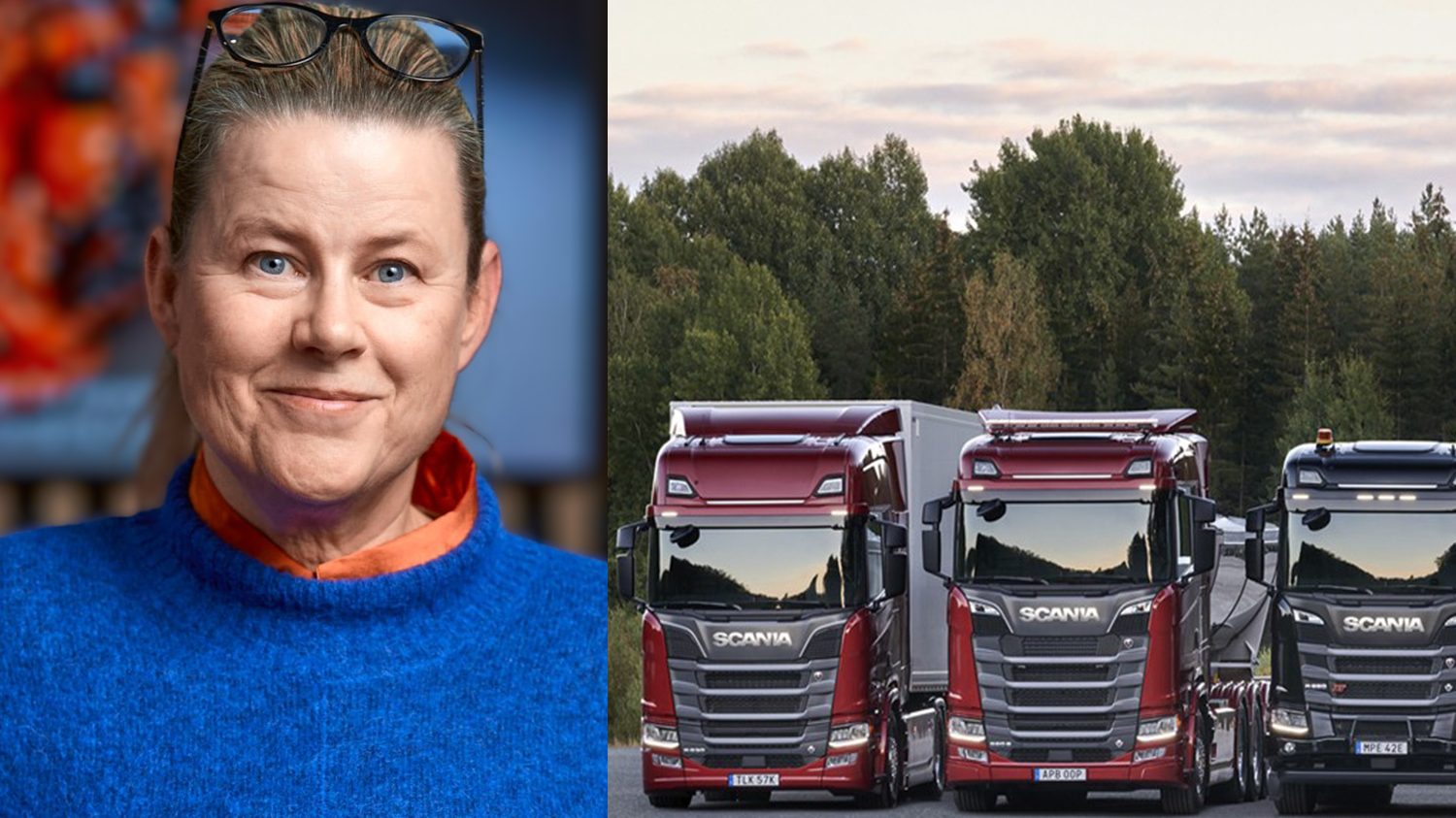
Scania is ordering all office staff back to the workplace five days a week. Akademikerföreningen is highly critical, urging management to let local managers decide based on business and employee needs.
Since the pandemic, white-collar workers at Scania – now Traton R&D – have had the opportunity to work remotely a few days a week. Now, company management has decided that starting August 10, office staff must return to the office full-time.
This has sparked a lot of emotion, says Christina Widén, chair of Akademikerföreningen, which represents over 4,000 members at the company.
– Members are disappointed. Many were hired after the pandemic and accepted their job offers on the premise of being able to work partly from home. Some engineers say they will look for other jobs.
The union highlighted the risks
Before the decision was made, the union highlighted several risks. They do not believe the offices are equipped for so many people and cannot offer a good working environment. Many employees work in global teams and collaborate via Microsoft Teams, requiring quiet rooms so as not to disturb one another.
The union has also raised the risk of losing talent when employees can no longer balance their work and personal lives. Furthermore, there are employees with special needs regarding their work environment, such as those recovering from burnout.
Satellite offices will remain in place
Scania motivates its decision to scrap remote work by stating that the global environment is changing rapidly and is characterized by uncertainty. Akademikerföreningen would rather see managers given greater authority to decide on remote work options.
In recent years, Scania has invested in satellite offices to reduce commuting to Södertälje. These will remain in place.
Read the entire article in Swedish: Scania slopar distansarbete – ”Aldrig tidigare så många kommentarer på ett ledningsbeslut”
Volvo faces criticism in the US – Union: “Risk of misinterpretation”
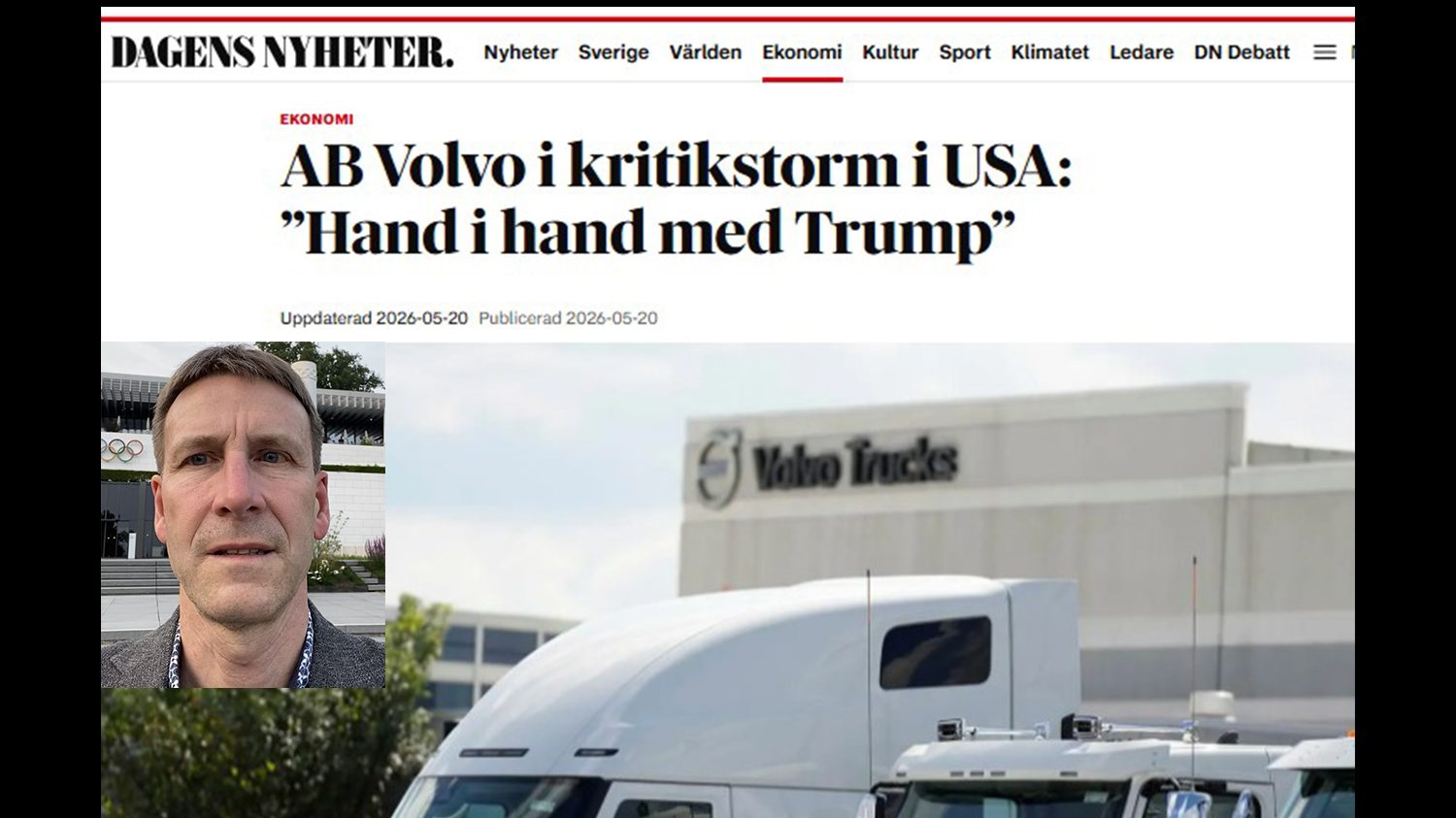
In an article in Dagens Nyheter Volvo is being accused of attempting to lower emission standards through legal battles in the US. However, Peter Månsson, corporate negotiator for the academics at Volvo, remains confident in the company’s commitment to reducing emissions.
Ingenjören received an email from a member of Engineers of Sweden:
“I am looking for a new engineering job and previously had a good impression of AB Volvo, where I used to work as a consultant. I just stumbled across this article, and it completely killed my interest in looking for a vacant position there.”
The article in Dagens Nyheter describes two separate legal proceedings in the US that Volvo is pursuing alongside other truck manufacturers. In one case, Volvo is suing the California Air Resources Board (CARB), which has issued stricter emission regulations than national limits. The second lawsuit, which critics have labeled “Trump’s biggest climate attack to date”, risks overturning all emission requirements across the United States.
Peter Månsson, Engineers of Sweden at the Volvo Group in Gothenburg. Why is Volvo taking this action?
– It is complicated, and parts of it can be difficult to understand. Volvo intends to comply with the legal requirements in all countries where we operate. Throughout the US, and specifically in California, there is legal uncertainty regarding which emission rules actually apply. The US Department of Justice has even urged Volvo and other truck manufacturers to stop following California’s Clean Truck Partnership initiative.
But why participate in a lawsuit?
– That is how the system works in the US. The question of which legislation actually applies must be settled in court. Until there is a ruling, the legal situation remains unclear.
Do you think some people interpret Volvo’s actions as lowering its climate ambitions when environmental requirements are challenged in court?
– Yes, there is a risk that it will be misinterpreted that way. However, for both Volvo and other truck manufacturers, it is crucial to have clear, long-term rules of the game. This is also necessary for investments in charging infrastructure for heavy vehicles. Right now, the slow expansion of that infrastructure is holding back the market in both the US and Europe.
Do you feel that Volvo’s focus on electrification remains as high a priority as before?
– Yes, without a doubt. Volvo has invested billions in developing electrified trucks, buses, and construction equipment. Volvo also supports the Paris Agreement and has worked for decades to reduce greenhouse gas emissions. The company also maintains its goal to be climate neutral by 2040.
Read the entire article in Swedish: Volvo kritiseras i USA – Akademikerna: ”Risk för att det misstolkas”
More to read in English
All articles in Ingenjören that have been translated into English
The guide from Ingenjören in English (magazine from 2024) – About Engineers of Sweden and the Swedish labour market model
Information in English from Engineers of Sweden (including button for Google Translate-version of the entire Engineers of Sweden website)