May: News from Ingenjören in English

Photo: Getty images
Scroll down or click on the list to go straight to the part you want to read:
- I have resigned – now my employer wants to raise my salary
- 107 Chalmers and KTH students suspended for cheating
- Unemployment figures remains stagnant
- The engineering manager with ADHD: “I am not alone”
- Do I have to change jobs to get a pay rise?
- Sustainability and Saab saw biggest gains in union election

I have resigned – now my employer wants to raise my salary

You have accepted a new job and handed in your notice. Suddenly, your manager offers you a higher salary, a new title, and promises of improvement. What do you do?
The most common mistake is to be attracted by the new salary. According to Lisa Rosengren, a career advisor at TRR, you must ask yourself why this offer is only appearing now, and reflect on why you wanted to leave in the first place.
These are Lisa Rosengrens tips on how to handle a counter-offer from your employer:
- Do not respond immediately. Ask for time, even if the offer sounds tempting. For instance, you could say: ’I wasn’t prepared for this. I need some time to think it over and get back to you.’
- Start with the reasons behind your resignation. Write down why you wanted to leave in the first place. Was it about the salary, the management, the working environment, the workload, a lack of development, or because you no longer believe in the company?
- Identify the decisive factors. You may have numerous reasons, but try to pinpoint the two or three that truly motivated you to move on. These are the factors that the counter-offer must address.
- Don’t let the salary overshadow everything else. More money might be the right answer if your salary was the primary issue. However, if you wanted to leave due to leadership, trust, or a lack of career progression, you must ask yourself whether a pay rise will actually change your day-to-day reality.
- Ask what will change. Inquire as to why this offer is being made now, what the employer intends to change, when you can expect to notice a difference, and what will be expected of you if you stay. Do not settle for vague assurances that things ”will get better”.
- Distinguish between promises and actual change. Salary, titles, training, and responsibilities can often be altered relatively quickly. Culture, values, and trust take longer. Therefore, request concrete commitments in writing, especially regarding a new salary, role, training, or responsibilities.
- Reflect independently first and trust your gut. Make your own assessment before consulting others. Afterwards, speak with someone wise who can help you talk things through objectively, rather than someone who will simply tell you what you want to hear.
Read the entire article in Swedish: ”Jag har sagt upp mig – nu vill arbetsgivaren höja lönen”
107 Chalmers and KTH students suspended for cheating

There are no comprehensive statistics available on how many engineering students were suspended for cheating in Sweden in 2025. However, 88 students were suspended at KTH and 19 at Chalmers.
In total, 1,935 students across Sweden were suspended for cheating in 2025. The “unauthorised use of AI tools” has risen and is now the most common reason. Plagiarism has decreased and is currently the second most frequent. The third and fourth most common forms of cheating are “cheat sheets and unauthorised aids” and “unauthorised collaboration”, according to a report by the Swedish Higher Education Authority (UKÄ).
At Chalmers and KTH, the figures tell a different story. Not a single student there was suspended for cheating involving AI tools.
– My explanation is that Chalmers and KTH only have faculties of engineering and technology. We rarely use take-home exams and do not have as many essays or dissertations as other higher education institutions, says Jörgen Blennow, Pro-Vice-Chancellor at Chalmers.
KTH’s Vice-Chancellor, Anders Söderholm, offers a slightly different perspective:
– I do not think we deviate that much from the others. AI could well be involved in cases of plagiarism or unauthorised collaboration. We simply have not categorised it specifically as AI.
Plagiarism, cheat sheets and mobile phones
At KTH and Chalmers, plagiarism, unauthorised collaboration, and “cheat sheets and other unauthorised aids” were the most frequent reasons for suspension. Having a mobile phone present during an exam is among the infractions counted as an “unauthorised aid”.
Chalmers utilises specialised software to detect plagiarism in submitted student assignments.
However, one major challenge is that regulations vary between individual courses. In some instances, the use of AI is permitted. In others, students are expected to collaborate during the course, but must work independently on their final assignments.
Be aware of the guidelines
Anders Söderholm and Jörgen Blennow advise students to ensure they are fully aware of the guidelines:
– The best approach is to familiarise yourself with the specific rules for each course, as well as the general regulations. If you are ever unsure: ask, says Anders Söderholm.
– Make absolutely certain you know what applies to each specific occasion. Are you allowed to use AI? If so, what kind? What does collaboration entail, and when are you expected to submit independent work? says Jörgen Blennow.
Read the entire article in Swedish: 107 Chalmers- och KTH-studenter stängdes av för fusk
Unemployment figures remains stagnant

Since January, unemployment figures among engineers have remained flat. Due to the uncertain global situation, many companies are once again putting their recruitment plans on hold.
In January, the outlook appeared bright. Unemployment had decreased for three consecutive months, and numerous indicators suggested that the downward trend would continue. In April, the unemployment rate stood at 1.6 per cent.
– The recovery has stalled. We believe that many companies are waiting things out and have slightly postponed their recruitment plans due to the current climate of uncertainty, says Albert Ohlin at Engineers of Sweden.
Mechanichal Engineering stands out
A closer look at the various engineering disciplines reveals no major shifts there either. The group that stands out the most compared to April last year is those holding a BSc in Mechanical Engineering. In this sector, unemployment has risen from 0.9 per cent in April last year to 1.6 per cent this year.
– Many within this discipline work for export companies that have been hit by the recent volatility on the global market. We can expect these figures to improve once the uncertainty subsides.
Hope for the future
Albert Ohlin notes that while we are currently in a challenging position, the underlying conditions are favourable for unemployment figures to start declining again, provided that geopolitical tensions ease.
– The fundamental conditions for hiring are better now than they were a year ago, but the uncertainty is causing companies to hesitate. Logically, businesses will resume hiring once the situation feels more stable, says Albert Ohlin.
Read the entire article in Swedish: Arbetslösheten bland ingenjörer står och stampar
The engineering manager with ADHD: “I am not alone”

Marianne Rimbark is a Change Manager at Ericsson and has ADHD. When she received her diagnosis, she founded an employee resource group for neurodivergent staff: the Neurodiversity & Allies ERG.
Within two years, the network has grown to include over 50 global ambassadors and an additional 500 allies supporting the initiative.
– Ericsson is an innovation company. We need all kinds of brains, she says.
Neurodivergent conditions are common among the general population – and likely among engineers as well. A company like Ericsson offers both innovation-driven roles, which suit many individuals with ADHD and dyslexia, and specialist roles, which can be well-suited to people with autism.
”How do you work best with me?”
In her own leadership, Marianne Rimbark is careful to assemble diverse teams where members complement one another. For instance, someone who excels at project management often needs specialists to successfully deliver their objective.
The key is curiosity. Every time Marianne Rimbark launches a new programme or project, team members are asked to answer the question: How do you work best with me?
– Some prefer morning meetings when they feel sharper. Personally, I ask for concise emails because I struggle to process long texts. You don’t need to ”come out” with a diagnosis – it is enough to explain how you function and what you need to succeed.
A network for parents
One aspect that is easily overlooked is that neurodivergent individuals often have neurodivergent children – something that can impact both daily life and work. Consequently, Marianne Rimbark has also started a parents’ network, which meets once a month for lunch.
– We celebrate together when someone’s child moves out or gets a job. And when a child receives a diagnosis, we are there to offer human support. The parents’ network is probably what I am most proud of!’ she says.
Marianne Rimbark’s message to managers:
- Neurodiversity is crucial for innovation and competitiveness.
- Everyone thinks differently – and that is a strength.
- Adapt the workplace to people’s needs, not their diagnoses. Curiosity and understanding are fundamental.
- Clarity, structure, and flexibility benefit everyone.
- Showing your own vulnerability creates psychological safety.
Read the entire article in Swedish: Ingenjörschefen med ADHD: ”Inte ensam om det”
Do I have to change jobs to get a pay rise?

Statistics from Engineers of Sweden consistently show that changing jobs yields the highest salary increases. But is the union’s advice to constantly move on?
– No, says Camilla Frankelius, Head of Negotiations at Engineers of Sweden. But employers are often too stingy when it comes to rewarding loyalty. They understand the cost of recruitment in theory, but rarely react until engineers actually start leaving.
However, the correlation between changing jobs and receiving a higher salary is not always absolute. In the 2024 salary survey, Engineers of Sweden noted that those who did not change jobs received higher salary increases than in previous years.
– It depends on the state of the job market and whether there are many redundancies, says Camilla Frankelius.
Then it’s time to take new steaps
The fundamental principle is that your pay progression should reflect your performance. If you are not receiving the salary you believe you deserve, make sure to communicate this to both your employer and the union.
If you have worked hard to increase your salary but have been unsuccessful, Camilla Frankelius believes it is time to take new steps.
– The strongest weapon you have in that situation is to change jobs. That applies if you are met with a lack of responsiveness, or if you go the extra mile and it doesn’t pay off.’
Further advice:
- You have the right to discuss actual figures and receive a clear explanation for your salary level.
- Ask questions: Why am I receiving this salary? What do I need to do more of? What do you mean by that? Encourage your manager to be clear and specific.
- During the pay review: Base the conversation on your own performance and relevant salary statistics, rather than discussing your colleagues’ salaries.
- Object if the salary offer is too low – far too many people accept the initial proposal too easily.
- If you feel you are facing pay discrimination: Raise the issue with your employer. If you do not receive a satisfactory response, escalate the matter to the union.
Read the entire article with all the graphs in Swedish: ”Måste jag byta jobb för att höja lönen?”
Sustainability and Saab saw biggest gains in union election
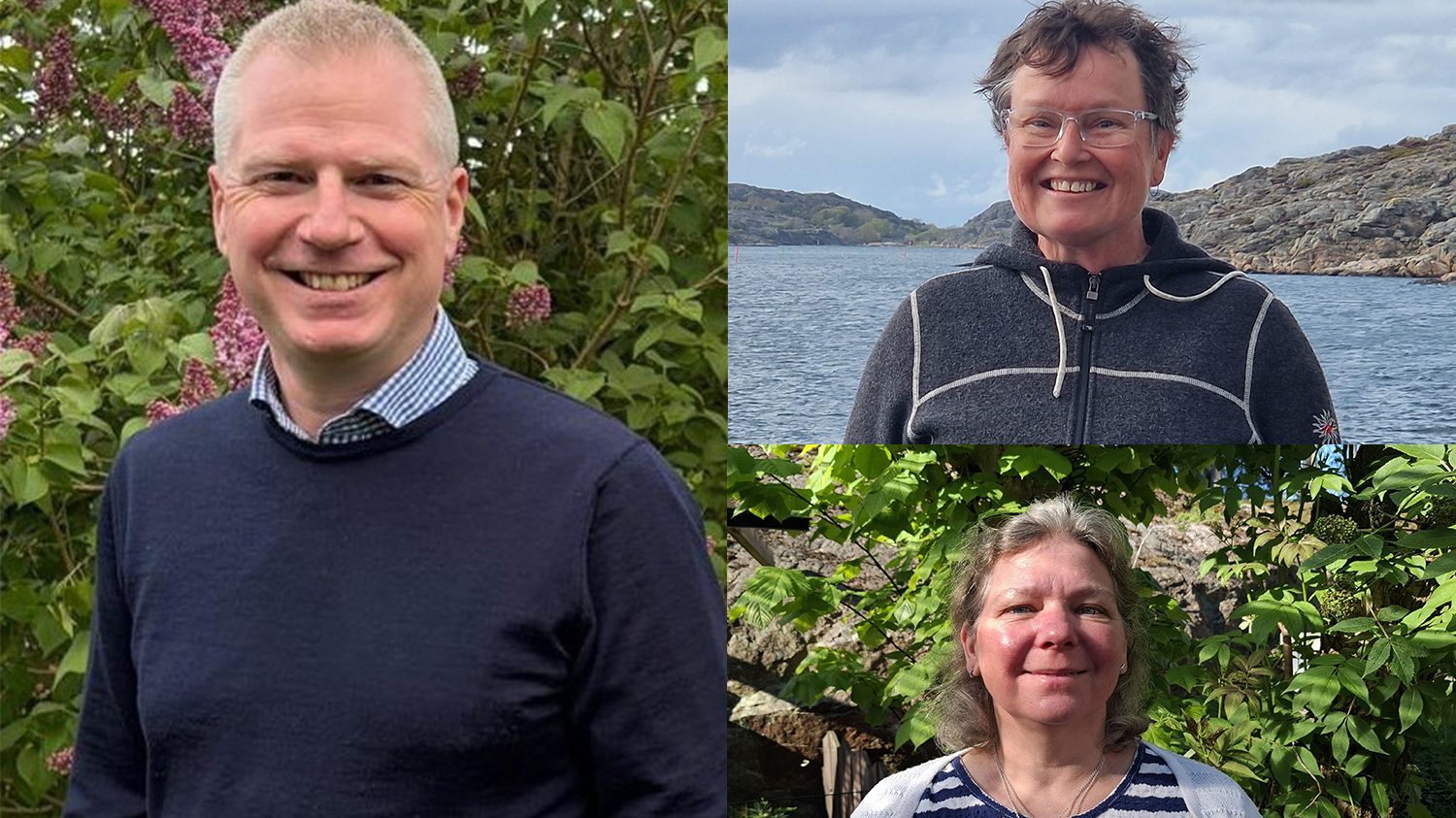
The Engineers of Sweden union election closed on 30 April, and the votes have been counted. Here are the results.
A total of 21 lists stood in the 2026 election, two fewer than four years ago. Every list that participated secured seats, with the largest gaining 10 mandates and the smallest receiving 1.
The largest group
The top result was achieved by Engineers for a Sustainable Society (Ingenjörer för ett hållbart samhälle), which increased its share by 3 mandates – rising from 7 to 10 – and is now the largest group.
Helene Åhsberg from Vattenfall, who heads the list, was somewhat shocked that so many members voted for them.
– It was unexpected but incredibly exciting. It is also very positive that so many members consider these issues to be important. This is partly about the environment and sustainability, but also about the sustainable development of Swedish companies and a sustainable working life.
Saab List focused on a name change
The second-largest increase was achieved by the Saab List, which went from 4 to 6 mandates, placing them in joint fourth. This year, they focused on a name change, or rather an addition: The Saab List – for Swedish industry, society, and preparedness.
– A resilient Swedish society relies on us having a strong industrial capability as well as both military and civil preparedness, which is why the name change felt important, says Lars Svensson from Saab in Gothenburg.
Winner of the personal votes
The highest number of personal votes went to Maria Sandberg at Trafikverket, representing the Engineers in civil service (Ingenjörer i staten) list.
– I sent an email to everyone at the Transport Administration who is a member of Engineers of Sweden, which is quite a substantial number. I wrote that I was standing in the election and asked them to be kind enough to vote for me. The email also included a direct link to the voting portal.
Do you think members know what the Engineer’s Council (Ingenjörsfullmäktige) actually does?
– No, I don’t think so. Every four years they receive reminders to vote, but very few probably know what the Engineer’s Council does between elections, says Maria Sandberg.
Lars Svensson shares this view.
– Even among local union representatives, people don’t really know what the Engineer’s Council does. Stepping up to get involved at the national union level is a big move even for them, but it is important. Furthermore, it is highly rewarding to network with engineers from other sectors and industries,’ he says.
Key facts from the union election:
- 21 lists contested the election.
- 194 members stood as candidates.
- 13,030 members voted, representing a 7.9 per cent turnout of all eligible voters.
- Of those who voted, 58 per cent were men and 42 per cent were women.
- Approximately 20 per cent of the elected representatives are completely newly elected and have not previously held a standard seat on the Engineer’s Council.
- The average age of ordinary representatives was 54 years.
- The candidates who received the most personal preference votes were: Maria Sandberg (Engineers in civil service list), Johanna Holmlund (Klöver dam – women’s network list) and Lars Svensson (The Saab List – for Swedish industry, society, and preparedness).
- Engineers of Sweden donates 10 SEK for every vote cast to the organisation Engineers Without Borders. With over 13,000 votes, this results in a donation of just over 130,000 SEK.
Read the entire article in Swedish: Hållbarhet och Saab ökade mest i Ingenjörsvalet
More to read in English
All articles in Ingenjören that have been translated into English
The guide from Ingenjören in English (magazine from 2024) – About Engineers of Sweden and the Swedish labour market model
Information in English from Engineers of Sweden (including button for Google Translate-version of the entire Engineers of Sweden website)